
When Donald Trump returned to power, 20 long months ago, some state leaders wrung their hands, worrying what explicit resistance might cost their citizens – and their careers – during the second term of a vengeful president. JB Pritzker was not among them.
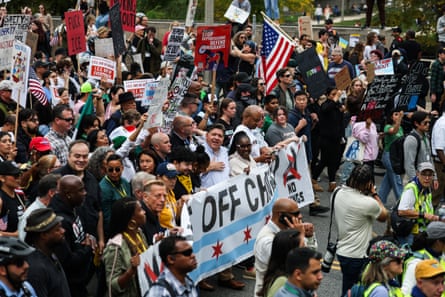
Two days after Trump’s re-election, the Democratic governor of Illinois warned the president would need to “come through me” to reach the people of his state. He waited all of 30 days after the inauguration before drawing a comparison with Nazi Germany.
“All I’m saying”, Pritzker declared during his State of the State address in February 2025, “is when the five-alarm fire starts to burn, every good person better be ready to man a post with a bucket of water if you want to stop it from raging out of control”.
Not everyone grabbed a bucket.
While Pritzker is willing to cede that he was not entirely alone in standing up to Trump in those early months, prominent figures alongside him could be counted “on each of your digits”, he suggests in an interview at his campaign headquarters in Chicago.
Several of his counterparts – from Gavin Newsom, who launched a legislative blitz to curb immigration enforcement in California, to Janet Mills of Maine, who told Trump she would see him in court over his bid to deny state funding over transgender athletes – could legitimately claim a digit.
Others have taken an altogether different tack. New York City mayor Zohran Mamdani is among those who have sought to strike a productive working relationship with the president. And in Washington, Senate minority leader Chuck Schumer faced fierce criticism after some Democratic senators reached a bipartisan deal to end the longest-ever US government shutdown.
Now, Pritzker suggests, the number of elected leaders willing to speak out aggressively against the administration is “finally” growing. “For one reason or another, people have chosen to come on board with Team Fight, and get off of Team Cave.”
Trump and Pritzker have a few things in common. Both are billionaires who inherited enormous wealth from their families. Both worked in business before entering politics. Both – no, the comparison pretty much ends there, says Pritzker, who, according to the governor’s campaign, has not spoken to Trump since the Covid pandemic.
“He’s a wannabe authoritarian, and I don’t say that rhetorically,” argues Pritzker, a philanthropist who helped build his state’s Holocaust Museum before entering office and spent time with survivors. “One thing that they would tell you is that you cannot give an authoritarian an inch.”
The governor is regularly cited as a potential contender for the 2028 Democratic presidential nominee – encouraged, however implicitly, by his self-appointment as captain of Team Fight in Illinois. Amid visceral anger among voters over the political status quo – not just at one party, or one president, but the sustained failure to fix big problems and improve their lives – could he do this job nationwide?
He has another election to win first.
Illinois is one of 36 states with gubernatorial elections coming in November. Pritzker is widely expected to become the state’s first three-term governor in more than three decades. (His Republican opponent, state senator Darren Bailey, finished 12 points behind last time around.)
Pritzker, first elected during Trump’s first term, says his tenure has been dominated by four crises: a fiscal quagmire inherited from his Republican predecessor; the Covid-19 pandemic; Texas governor Greg Abbott’s move to send tens of thousands of migrants to Chicago; and Trump’s return.
All the while, he says, he has focused on affordability and the rights of Illinoisans, from raising the state minimum wage to codifying reproductive rights. After a string of credit rating upgrades, Pritzker likens alleviating the state’s financial woes process to reorienting an aircraft carrier 180 degrees – something he claims to have done, although critics note Illinois retains one of the lowest ratings in the country.
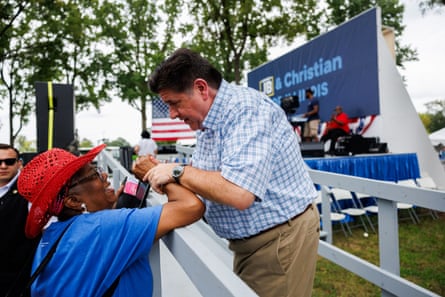
With Democrats hoping to use November’s midterm elections to mount a significant fightback against Trump, Pritzker launched a $20m political action committee to support party campaigns nationwide, recently flew to Texas to help counter-program the Republican convention, and will soon head to South Carolina, the first state in Democrats’ next presidential nominating process, to address the NAACP state conference.
His job might be in the state of Illinois, but his career aspirations sure look national.
Time is slowly but surely ticking on the Trump era. With the president barred by the US constitution from running for a third term, the searing political spotlight will soon shift, whether he likes it or not, on to those vying to succeed him.
As Democrats search for a candidate who could win back the White House and confine this chapter to the history books, speculation around Pritzker’s aspirations stepped up a level last week when he disclosed he has been using a GLP-1 medication to lose weight over the past two years.
Pritzker “knows what a lot of people may be thinking”, reported CBS News, which broke the news. “Eyeing a 2028 Bid, He Used a Weight-Loss Drug to Drop 80 Pounds,” ran the New York Times headline. “Ahead of Possible Presidential Bid, JB Pritzker Says He Is Taking Weight-Loss Drugs,” offered the Wall Street Journal.
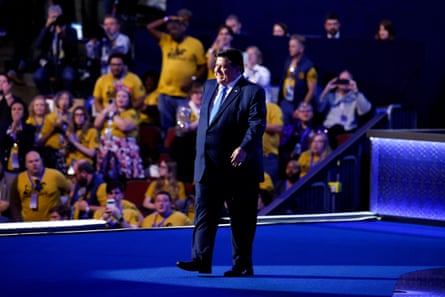
Just how many times has he been asked if he’s running for president? For the first time in our hour together, Pritzker hesitates. “I’m not sure the connection,” he replies. “National political reporters can’t help yourselves,” he adds, referring to the way the announcement about his health was covered. “I’m not sure the question. You’re asking … what are you asking me?”
How many times has Pritzker – a politician who argues Democrats should campaign nationally on issues he so happens to have championed in his state – been asked if he’s running for president? “Reporters that don’t know me” continue to ask “very often”, he concedes. “I understand why people ask the question,” he continues, pointing to his record in Illinois. The conspicuous lack of a firm answer might also have something to do with it.
He is more open to discussing what exactly went wrong at the last election, and the factors behind the crushing defeat suffered by Kamala Harris in 2024.
Beyond the “entire setup” of Joe Biden’s withdrawal 15 weeks before polling day, Pritzker wishes the campaign had focused more on “putting money in people’s pockets”, citing an increase in the national minimum wage, which has stood at $7.25 per hour since 2009. “People need to hear that you’re going to do something tangible for them today, immediately.
“I think the campaign should have entirely been about working families, the middle class, people striving to get there, and the most vulnerable,” says Pritzker. “And I often say those things – I mean, I talk about those people – because that’s why I’m a Democrat. And it’s why, I think, most people are Democrats, or would vote for a Democrat.”
It is also, perhaps coincidentally, one of the key areas where Pritzker says he has delivered in Illinois. From the outset as governor, he took the view that he should be “fighting for the things that in your everyday life are challenging, fighting to overcome those challenges, and fighting for things that make it a little easier”, he says. Even in campaign mode, he acknowledges one failure: his signature plan to overhaul the state’s tax system from a flat rate to a graduated levy, which was rejected by voters in 2020.
While Pritzker has endured his fair share of attacks and potshots as governor, not least from Trump, a presidential run would bring a whole new layer of scrutiny – of his record, his background, and his wealth.
An heir to the Hyatt hotel chain who ran an investment firm with his brother before running for governor, Pritzker’s personal fortune currently stands at about $4.2bn, according to Forbes: significantly more than Trump’s fortune before his return to office, albeit significantly less than Trump’s fortune today.
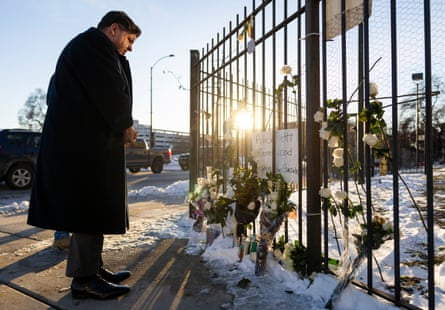
In 2024, Pritzker made more than $1.4m while playing blackjack on vacation. “I was incredibly lucky,” he said at a press conference at the time. “It was in Las Vegas, and I like to play cards,” he added as an explanation. We’ve all been there.
(The governor’s campaign said he donated the winnings to charity.)
This year’s Democratic primaries have been dominated by headlines about anti-establishment, anti-elite candidates – including some members of the Democratic Socialists of America, or DSA – clinching the party’s nominations, from Michigan and Pennsylvania to New York and Florida. Pritzker has been watching closely.
“I think there is a desperate need for elected officials to address affordability,” he says. “And the candidates that are winning are the ones who are communicating their passion for the issue, and their articulation of the policies that will bring that. I think if you’re not showing up with that, then you’re missing the point.”
Sure, Pritzker cedes across the boardroom table; “some national reporters” have “focused” on DSA victories. “But I will just point out to you that that’s a very, relatively small percentage of the results in primaries,” he suggests. “Although they’re notable.”
“The more outspoken people, even if they weren’t DSA members, I think won,” he adds. “And they won because that is what people are feeling. People are hurting, genuinely pained, right now.”
A notable number of Democratic candidates won the party’s nomination by speaking out not only for those struggling to make ends meet – but also against those at the other end of the spectrum, with extreme wealth.
Is today’s Democratic party really prepared to send a billionaire to the White House?
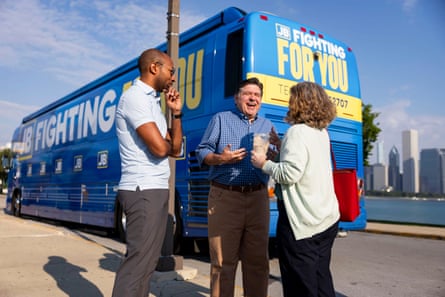
Pritzker allows a brief chuckle. “Could we rephrase that question? Because you’re trying to single me out, I think,” he says. “How about if we say it a little – I’ll just answer it the way I want to.”
“When I ran in [the Illinois gubernatorial] Democratic primary in 2018, people asked the question, do we really want a businessman billionaire to be our Democratic candidate for governor? I think a legitimate question, given … what people were seeing,” he says, pointing again to Trump, but also Bruce Rauner, the former Republican Illinois governor – a mere multimillionaire at the time – whom he went on to defeat.
“Legitimate question today,” acknowledges Pritzker. “Look at Elon Musk. Look at Sam Altman. Look at – we could make a list, whoever you want to fit in what sometimes people refer to as ‘the oligarchs’ in that group. I understand the skepticism that people have about wealthy people.
“But what I can tell you is that, over the course of the last eight years – and I think over the course of my life, really, but certainly as people have paid more attention over the last eight years – I’ve proven that I have, in fact, done more for working people in this state than maybe any governor in the country, and … restored services for the most vulnerable people in our state.
“And so the real question is, what are your values? Not how much money do you have, but what do you believe?”
Ino Saves New
via rk2’s favorite articles on Inoreader https://ift.tt/tW1gMZL
October 3, 2026 at 12:36PM

