
An estimated 35% of households in Chicago face some form of food insecurity, according to a report published Monday by the Greater Chicago Food Depository.
The depository, which supplies food to hundreds of food pantries across Cook County, partnered for the first time with NORC at the University of Chicago to release “Hunger in Chicago Report,” detailing which communities and types of households face some level of food insecurity, which is defined as experiencing disrupted eating patterns or reduced food.
Chicago residents who participated in the survey this summer were asked a series of questions, such as if household members in the past 30 days had either skipped meals or reduced portions because there wasn’t enough money to buy food.
The report released Monday indicates food insecurity is more widespread than what previous reports had indicated. In 2024, about 13% of households in Illinois were experiencing food insecurity and about 24% were marginally food insecure, according to an analysis of data from the University of Kentucky Center for Poverty Research.
Kate Maehr, chief executive officer for the Greater Chicago Food Depository, said the food insecurity people are experiencing is driven by inflation driving up grocery prices and families still recovering from changes to the economy since the COVID-19 pandemic.
“The data is so stark, and the stakes are so high,” Maehr said. “This is a basic, moral issue. I believe that food is a basic human right, and more than a third of the households in our great city are struggling with access to something as basic as food.”
The greater need for food comes amid changes to the largest food assistance program, Supplemental Nutrition Assistance Program. SNAP has undergone expanded work requirements for participants and will dramatically shift program costs to states as part of President Donald Trump’s massive tax and spending plan often referred to as the One Big Beautiful Bill Act that was signed into law last year.
Already in Illinois, participation in the federally-funded food assistance program has fallen by 16% compared to 2025, according to the Illinois Department of Human Services. As of June, the number of people receiving SNAP benefits dropped to nearly 1.6 million people — the lowest number of people receiving food assistance in the state since 2009.
Maehr described the changes as “the rug being pulled out from under the feet of families that were vulnerable, and it took away this critical resource for so many people.”
Food insecurity is particularly pronounced on the South Side, where 51% of residents surveyed indicated they either had very low or low food security, according to the report.
Among the city’s racial groups, Black residents reported the highest level of food insecurity at 61%, according to the depository’s report. In contrast, only 14% of white households reported having limited access to food.
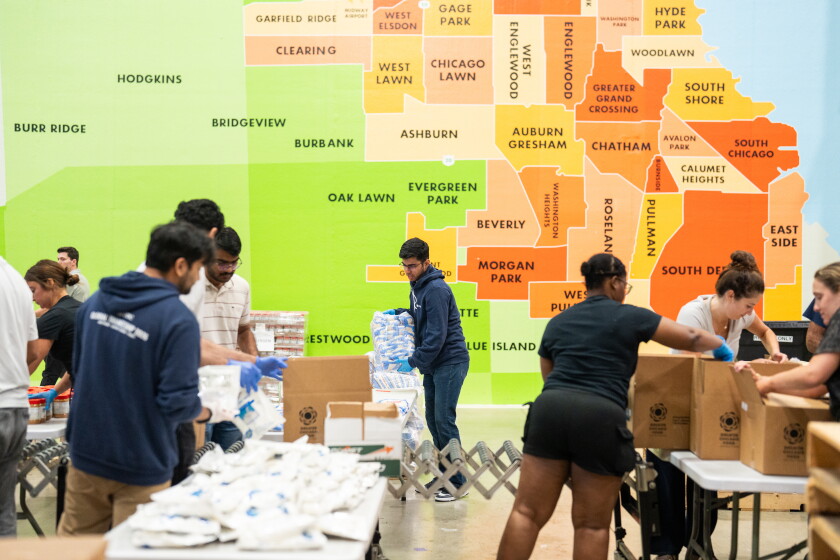
Dion Dawson, chief executive officer of Dion’s Chicago Dream, sees the need across the city. The organization delivers a free 10-pound box of fresh vegetables and fruits across the city but primarily to residents living in Englewood, Austin, Garfield Park and Roseland. They currently have more than 5,000 households on their waitlist.
Food insecurity is tied to a lack of other resources, Dawson said, nothing residents are also grappling with high levels of unemployment while also seeing a reduction in social services and medical care. That’s why to address food insecurity, officials have to also look at job creation, Dawson said.
“We don’t necessarily just have a money problem; we have an allocation problem when it comes to some of the resources in philanthropy and in social services as a whole,” Dawson said.
The survey also found about 47% of households with a child reported dealing with food insecurity. Maehr said they will urge lawmakers to make policy changes to address food insecurity for children or risk losing a generation.
“The data is so clear on what will happen to children if they do not have adequate access to quality, nutritious food in the first five to 10 years of their life,” she said. “It is not a 2026 problem — it is a 2036 problem, it is a 2046 problem, it is a 2056 problem.”
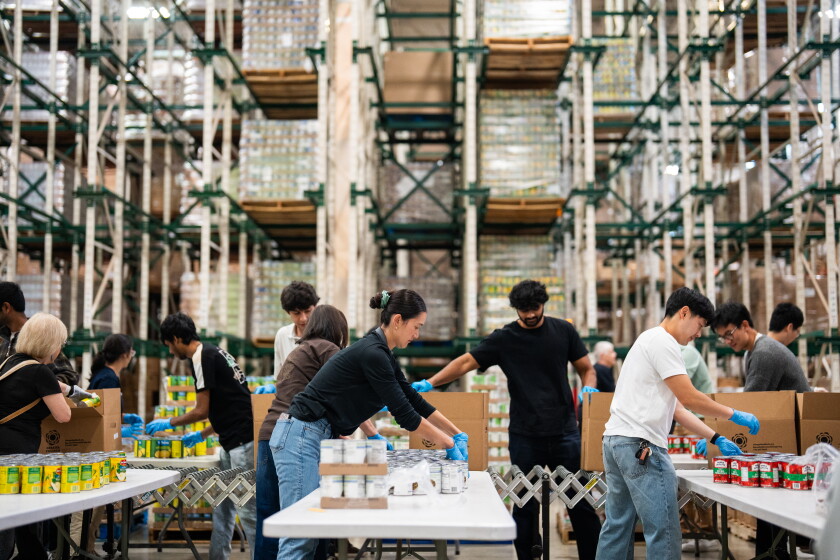
Maehr said the report’s findings are also an indication of the new type of economy people are living in: one in which workers aren’t making enough to keep their refrigerators and pantries stocked.
About 31% of those who were food insecure were employed in some capacity, and about 27% of food insecure residents were retired, the report found. The depository’s findings also indicated those who face food insecurity are delaying or skipping payments for utilities and medical care. About 29% of those who are food insecure are also delaying or skipping rent or mortgage payments.
“They are having to turn to this system, the emergency food system, and other trade-off decisions, including, in some instances, families who make the choice, parents who make the choice not to feed themselves so that their children can have food,” Maehr said. “They’re making these choices every day in order to be able to get by in America.”
Dawson, from Dion’s Chicago Dream, said the report in many ways confirms what he and others working in the emergency food system see every day.
“Now it’s on us to make sure that we respond in a way that can honor all of these residents who are currently seeing themselves food insecure,” Dawson said.
Top Feeds
via Chicago Sun-Times: Chicago news, politics, sports and more https://ift.tt/NDnrBmc
September 14, 2026 at 05:43AM
 Illinois Delivered