
We’re in the eleventh hour for the state legislature to address the looming $771 million Chicagoland transit fiscal cliff. The end of the regular legislative session is this Saturday, May 31, and transit budgets that need to be in place by the end of fall. Facing increasing labor costs, slow ridership recovery, and a state-imposed farebox recovery ratio of 50 percent, the options are either to reach a state agreement on additional funding, or balance the budget through a combination of service cuts and fare increases. In the midst of this, calls for ‘no funding without reform’ have materialized. Earlier this week, there were two reform bills that seemed to be racing towards a photo finish: HB 5823, the Metropolitan Mobility Authority Act; and SB 1938, dubbed the "United We Move Illinois" proposal.
At the heart of the matter is the farebox recovery ratio, the current state requirement that 50 percent of operations funding for the CTA, Metra, and Pace be generated by the system itself from fares and other revenue sources like advertising. Since the COVID-19 pandemic hit in early 2020 and ridership plummeted, the resulting revenue shortfall has been filled by federal relief funding, which is expected to run out by the end of this year. Although fare revenue yet to return to 2019 levels, the transit agencies will still be required to balance the expenditure side of the budget.
If the choice were only about allocating additional funding or reducing the minimum amount of revenue that the three systems have to collect from passengers, there would have been minimal discussion amongst state legislators. But on top of that, some lawmakers are demanding governance reform, which has led to long debates over how the system will be run, and by whom.
Since May 2024, state senators and representatives have been in protracted negotiations about which politicians should have the clout to appoint directors to which of the four governance boards. They’ve also discussed whether to create a dedicated police force, and if the transit agencies should be granted powers over land use and zoning.
Meanwhile, the Regional Transportation Authority, which oversees the three transit systems, has argued that emphasizing reform is putting the cart before the horse. The umbrella agency would prefer that the Illinois Legislature focus on fixing the funding problem first.
A dark horse
A compromise bill has been in the works behind the scenes this week. the legislation would rename the RTA as the Northern Illinois Transit Authority and authorize it to determine the budgets and fares for the three agencies.
Yesterday, Rep. Kam Buckner (D-26th) took an step to amend SB 2111, well-known to Streetsblog readers as Sen. Mike Simmons’ (D-7th) Idaho Stop bill). The amendment replaced the bill’s text with an 804-page omnibus transit bill instead, allowing this otherwise new legislation to jump into the race with fewer proceedings.
The proposed NITA bill does not provide for filling the budget gap, and a separate bill allocating funding to NITA (and the service boards) has not been introduced as of the time of writing. The legislative timeline is quite fast-paced this week, and such a bill could still appear by the budget deadline. Without it, though, there will be no revenue for these reforms.
What’s in the bill
The new SB2111 introduces the Northern Illinois Transit Authority (NITA) as a replacement for the Regional Transportation Authority (RTA), and makes several notable changes to the status quo.
- Lowers the farebox recovery ratio – the proportion of revenue that the region’s transit system must collect from passengers – to 25%. This reduces pressure to raise fares or to only serve higher-value routes.
- Establishes a new cross-jurisdictional law enforcement task force, an Office for Transit Safety and Experience, and a Chief Executive Transit Safety Officer. Within one year, the new NITA board will vote on recommendations to implement sworn law enforcement on transit.
- Creates a new Transit Integration Policy Development Committee and a Transit Coordination Oversight Officer within IDOT, to integrate transit and highway planning.
- Adopts a regionally coordinated service plan in 2026, with service boards making proposals to be incorporated into a final NITA plan. NITA would also be in charge of setting fares, with input from the three transit agencies.
- Requires local governments to add sidewalks to transit stops when reconstructing a roadway within a quarter-mile of a transit stop, which may be reimbursed by NITA.
- Allows the NITA board to establish a Dial-A-Ride (DAR) service program, which would provide curb-to-curb transportation beyond the requirements of the Americans with Disabilities Act for paratransit. The DAR services that exist are provided by local governments that elect to do so.
- Includes reducing greenhouse gas emissions and increasing transit ridership share as goals to be included in NITA’s 5-year strategic plans, influencing service plans and capital investments.
- Allows NITA to finance and construct transit-supportive developments within a half-mile of rail stations and an eighth-mile of bus routes, complying with local zoning and land use regulations.
- Requires a fare-capping program within two years. This ensures that passengers would not have to buy a day pass or multi-day pass in advance to get the financial benefit of having one.
- Free rides for seniors (65+) and those with disabilities, and reduced-fare programs for survivors of domestic violence, veterans, and those experiencing homelessness. (These programs do not have a dedicated funding source yet.)
- Allows NITA to establish a traffic law enforcement program in jurisdictions without adequate local enforcement, enabling violations for stopping in bus lanes or at bus stops.
- Establishes a transit ambassador program by June 2026, comprised of trained, unarmed personnel on buses, bus stops, trains, and stations. This will include CTA station attendants and customer-facing staff on Metra, who will be re-trained for new duties.
- Introduces ‘service standards’, developed by 2028 and used to distribute all funding by 2031. These include publishing monthly reporting of performance measures, including on-time performance, ridership, crowding, and customer safety and satisfaction.
- Integrates the "People Over Parking" act that prohibits local governments from requiring car parking in developments near transit facilities.
Transit agency boards would change
Additionally, the proposed bill completely refashions how the board of the regional oversight agency is composed as well as each of the three transit agency boards. Some board members on the three transit agency boards will also serve as board members on the NITA board. The RTA currently has a board with 13 members, and the replacement NITA board would have 20 members.
- NITA: 20 members, comprising 5 by Chicago’s Mayor, 5 by Illinois’s Governor, 5 by the Cook County Board President and 5 from the collar counties (1 each per county)
- CTA: 6 members total, comprising 3 by Chicago’s Mayor, 2 by the Cook County Board President, and 1 by Illinois’s Governor
- Pace: 13 members total, comprising 6 by the Cook County Board, 5 from the collar counties (1 each per county), and 1 Chairperson selected by the Pace Board. There would also be a non-voting ex officio: the Chicago’s Commissioner of the Mayor’s Office for People with Disabilities (MOPD).
- Metra: 7 members total, comprising 1 by DuPage County, 2 by a concurrence of Kane, Lake, McHenry and Will Counties, 3 by the Cook County Board, and 1 by Chicago’s Mayor.
Time is not on our side
If the legislature fails to pass a budget or reform bill before the end of the week, it’s not the end of all conversations. While the regular session ends with a budget deadline on May 31, both chambers typically resume for a fall veto session in October or November. Stalled bills from the regular session may be revived in the veto session with extra time to debate, but any new bills will require a three-fifths majority to reach the governor’s desk. The legislature will likely be working on amendments to legislation that is already introduced or trying to override any bills Gov. Pritzker vetoed.
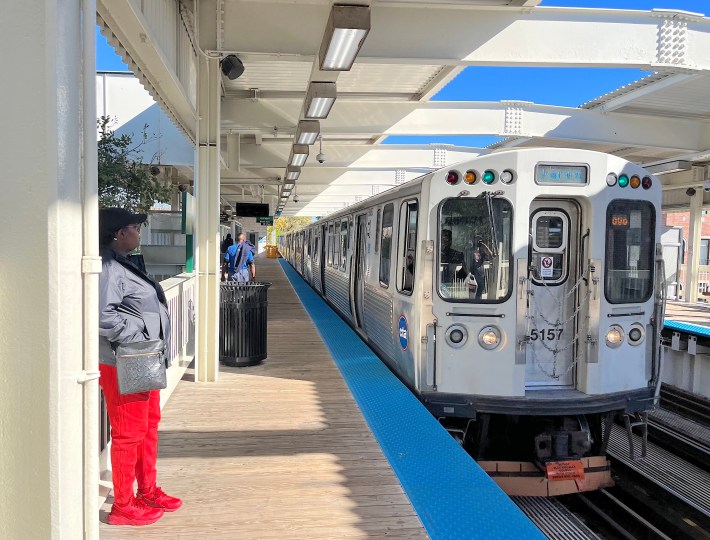
However, waiting that long might be costly, as the region’s transit agencies can’t pivot between budget alternatives quickly. Whatever is passed, or not, in Springfield by May 31 will be assumed as the budget starting on January 1, 2026, and the transit agencies must prepare and hold hearings for their 2026 budgets. They will need to adjust staffing levels to match the new operating budget, and must do so in time for the “pick” process to match drivers with bus and train runs. Additionally, Metra will have to negotiate with its host railroads for timeslots. All of these are complicated negotiations that take time to implement, and are difficult to undo if funding is increased after they take place.
With a budget shortfall around $770M, the stakes are high. Each transit agency has already warned of how much service they would need to cut to balance their budget.
Chicagoland has seen this kind of budget chaos before in 2008, when a budget shortfall of $226M came up against the wire. After a special January session, Gov. Blagojevich signed the bill just four days before the CTA was due to cut 81 routes. Just months before, a service cut of 39 routes in November had been stalled with an emergency grant. Riders were being messaged constantly about what would be cut and when fares would increase, only to see crisis averted by days.
While nothing public has been said of fare increases being on or off the table, the 2008 crisis shows one outcome of the chaos of late decision making. A one-two punch of service cuts and fare increases has the potential to induce a vicious circle and further shortfalls, which might mean transit heading back to Springfield again the following year.

Did you appreciate this post? Streetsblog Chicago is currently fundraising to help cover our 2025-26 budget. If you appreciate our reporting and advocacy on local sustainable transportation issues, please consider making a tax-deductible donation here. Thank you.
Ino Saves New
via rk2’s favorite articles on Inoreader https://ift.tt/zGTO97g
May 28, 2025 at 03:05PM

