
* Click here to read the governor’s address. The Health Benefits for Immigrant Adults program has been eliminated, according to a senior administration official during today’s budget briefing for reporters…
“HBIA is not funded in the proposed budget. The cost for that is about $420 million a year, of which $330 approximately, would come from the General Revenue Fund.”
More on the program is here. It’s a health coverage plan for undocumented immigrants aged 42-64 and is highly controversial.
* A follow-up question during this morning’s budget briefing…
Q: What’s the thinking on [defunding HBIA]?
A: Well, I mean, this was a difficult decision. There’s no doubt about that. But I think it reflects the reality of our fiscal situation that we have flagged now for several months. And I think you will see not just with what the governor is proposing for HBIA and the [Health Benefits for Immigrant Seniors] program, but throughout the budget. It’s a reflection of difficult decisions that we had to make in order to bring the proposal into balance.
As you know, this is a budget request of the General Assembly. The General Assembly is going to start its processes today, after the governor submits his budget. And we’re happy to engage with our partners in the General Assembly for any creative solutions that they might have, not just for HBIA, but for anything else reflected in the proposal. And you know, we have always faced a challenge, some larger than others, in terms of bringing budgets into balance. But as evidenced by what we’re presenting today, those challenges have always been met by working in partnership with with the General Assembly, and this program and other programs that are not being funded in the budget this year are a reflection of the reality that we face.
The senior healthcare program remains intact, but the administrative rule barring all new enrollment will remain on the books.
The proposal also reduces Welcoming Center appropriations from $139 to $40 million.
* Excerpts from the Senate Republicans’ highlights…
· Largest budget in state history—$55.4 billion, increasing spending by $2 billion.
· Increases state budget by $15 billion or 37% since Gov. Pritzker took office.
· Includes four revenue proposals for $490 milliono $198 million – reinstates the FY 20 Delinquent Tax Payment Incentive Program
o $171 million – Pauses shift of sales taxes [to Road Fund] for one year
o $100 million- realigns the tax treatment for 15 of the 16 Illinois casinos (excluding the Chicago casino)
o $20 million – Eliminates the state-level deductions for cannabis industry businesses
* The budget briefing is here. The proposed operating budget is here. The proposed capital budget is here.
* Walkdown…
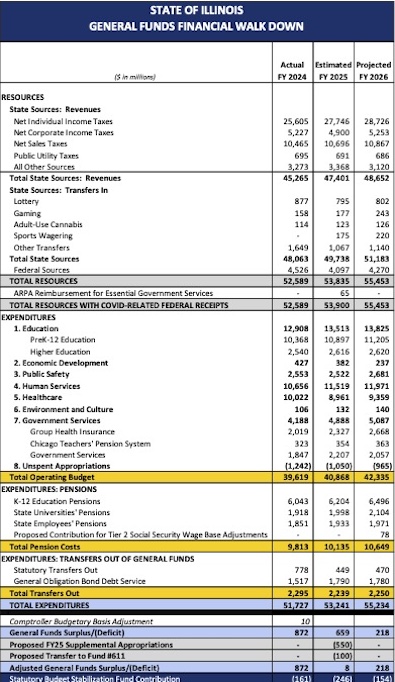
* Revenue forecast change explained…
• General Funds FY26 revenues are estimated to total $55.453 billion, a $1.553 billion, or 2.9%, increase from revised FY25 estimates.
• Base revenue growth in state sources revenues is estimated at 1.9%.
• Base revenues are approximately $1.5 billion above November preliminary estimates.
• FY26 revenue forecast benefits from several proposed revenue adjustments, including:
• Delinquent Tax Payment Incentive Program – $198 million for General Funds.
• Pause the final shift of state sales taxes on motor fuel purchases to Road Fund – $171 million.
• Realignment of tax treatment for table and electronic games at casinos – $100 million.
• With these adjustments:
• FY26 individual income taxes are forecasted to grow $980 million, or 3.5%.
• FY26 corporate income taxes are forecasted to grow $353 million, or 7.2%.
• FY26 sales tax receipts are forecasted to grow $171 million, or 1.6%.
* Excerpts from a distributed document entitled “Proposed budget toplines”…
New discretionary spending is increasing by less than 1%.
The state is maintaining its commitments to mandatory spending like full pension payments, inflation on healthcare coverage, and debt pay-down.
The budget proposes cost-saving operational efficiencies to save taxpayers money, including consolidating
unnecessary segregated funds, evaluating dormant boards and commissions, and determining what state
government functions could merge to improve efficiency and savings.Mobilizing $500 million in state capital funds to develop properties and real estate that have been sitting idle into
areas that are ripe for economic development and job creation. […]Lowering healthcare and prescription drug costs by stopping predatory practices used by pharmacy benefit
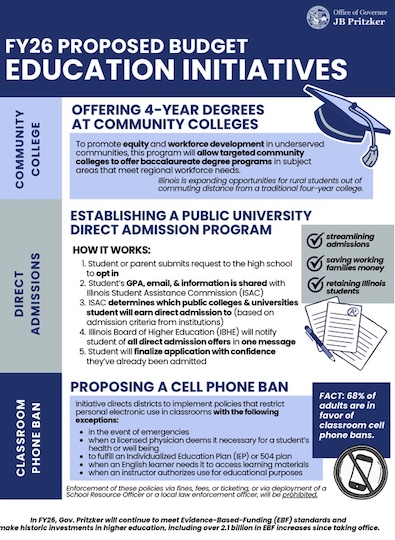
managers;Lowering education costs, allowing community colleges to award BA degrees and streamlining public university
admissions process to reduce application fees;Lowering property taxes, enabling communities to decide if they want to consolidate townships or eliminate duplicative taxing bodies.
* Various one-pagers…
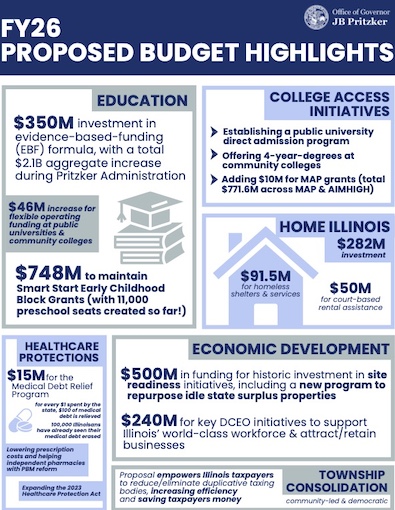
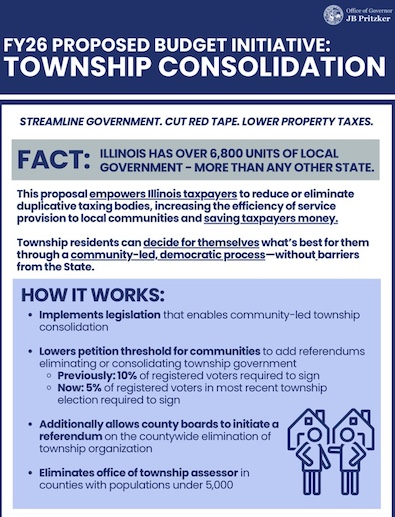
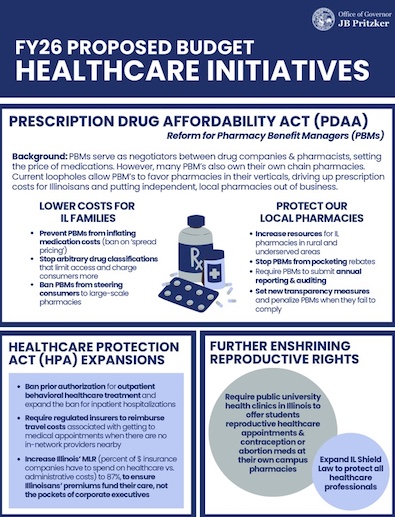
CF Full
via CF Full https://ift.tt/Xo16S2Y
February 19, 2025 at 12:23PM

