
By Ted Cox
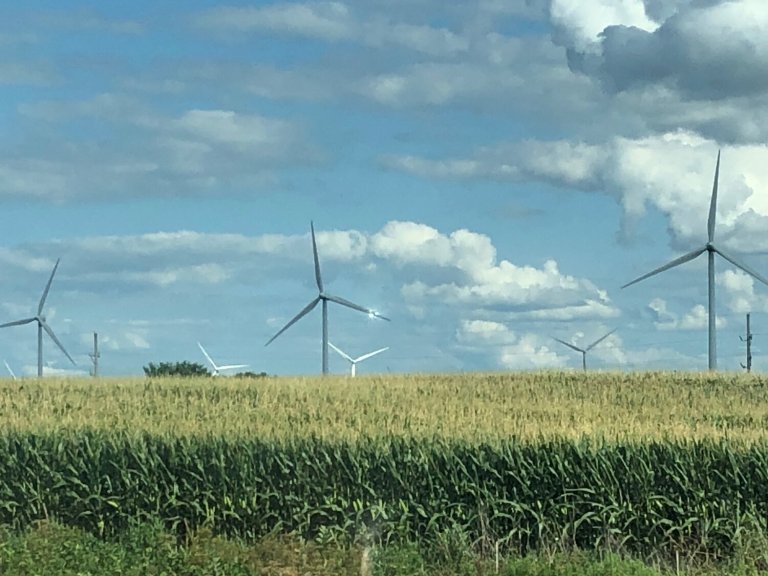
A new federal report projects that for the first time the nation will generate more electricity from renewable energy this year than from coal.
It’s in part a product of the economic slowdown resulting from the coronavirus pandemic, as demand for energy is down, while the cost of building wind farms and solar panels has also declined dramatically. The New York Times reported this week that “because coal plants often cost more to operate than gas plants or renewables, many utilities are cutting back on coal power first in response.”
As such, the U.S. Energy Information Administration projected in a report released this month that emissions of carbon dioxide, produced in large part by the burning of coal for energy, will drop 11 percent this year, the biggest decline since the middle of the 20th century 70 years ago.
Just a decade ago, coal produced half the nation’s energy. But cleaner-burning natural gas has moved to the forefront, in part because of lower costs brought on by increased supply from fracking. The EIA report projected natural gas would generate 39 percent of the nation’s energy this year.
Coal, meanwhile, will see its share of the energy market decline by more than a fifth, from 24 percent to 19 percent, while renewable power — including wind, solar, hydroelectric dams, geothermal, and biomass — makes up 20 percent. The rest of the nation’s energy is expected to come from nuclear reactors, accounting for just over 20 percent of the total.
While the agency projected that coal may rebound somewhat next year if the pandemic subsides and the economy recovers, the prevailing trend is undeniable, and the Times pointed out it “comes despite the Trump administration’s three-year push to try to revive the ailing industry by weakening pollution rules on coal-burning power plants.”
The Times added: “The cost of building large wind farms has declined more than 40 percent in that time, while solar costs have dropped more than 80 percent. And the price of natural gas, a cleaner-burning alternative to coal, has fallen to historic lows as a result of the fracking boom.”
In spite of those weakened coal regulations, it has simply proved to be less competitive as an energy source. Vistra Energy declared last August that it would be closing four Illinois coal-powered plants, and it followed a month later with the announcement that it would be closing a fifth south of Peoria.
That doesn’t mean the Trump administration isn’t continuing to try to put its finger on the economic scale.
26-Delivered
via 1IL
May 15, 2020 at 11:43AM
 Illinois Delivered