
Illinois lawmakers say they have concerns with increasing higher education funding because of a tight budget.
The Illinois Board of Higher Education is requesting a nearly 5% increase in its budget for public colleges and universities and a change to flexible funding informed by specific institutional factors, referred to as "evidence-based."

The state adopted an evidence-based model for K-12 education funding in 2017, as a way to reduce disparities in education funding.
Illinois lawmakers are waiting for the proposed budget and more data to make a final decision on new funding for higher ed.
State Rep. Sharon Chung, a Democrat from Bloomington, said she does not think there will be an increase in higher education funding because of what she called a "tricky" budget.
“When it comes to funding for fiscal year 2027, I’m not quite sure what that’s going to look like. We have so many needs throughout the state, especially with a lot of the federal funding cuts,” Chung said, adding she would support a funding increase for higher ed if it can be supported by this year’s budget.
Chung said she supports evidence-based funding for higher education, but it would require more funding.
“We want to make sure that universities are also being funded in an equitable, predictable way, but the big roadblock is trying to figure out how we’re going to fund this,” she said.
Chung said another reason a new funding formula has not passed is because of opposition from the University of Illinois. The U of I system has argued the legislation penalizes universities that are closer to reaching their adequacy targets.
Chung said Illinois State University is actively discussing how to save money and finding areas to cut if there is no increase in funding.
“To sort of look at how every institution is spending money trying to figure out how we can maybe do more with possibly less,” Chung said. “I don’t know what that’s going to look like, but I know that they’re sort of doing this to some extent at Illinois State.”
Glen Nelson, ISU’s vice president for finance and planning, said the university is looking into different budget scenarios for the coming fiscal year.
"Many costs continue to rise, and we continue to focus on identifying options that will help minimize financial impacts to our current and future students. Illinois State continues to be funded at the lowest per student funding level of all Illinois public higher education institutions. Generally speaking, Illinois State supports legislative action that provides an increase in state appropriation as well as current legislation that creates a funding model that proactively addresses this significant inequity," Nelson said in the statement.
Filling the gap
Chung said the most immediate way to support universities right now is for Gov. JB Pritzker to release $29.5 million of the higher ed budget that he has the authority to hold.
Ashley Farmer, president of United Faculty at ISU, said despite rising enrollment, now ISU is focused on covering costs instead of providing a quality education because of decades of underfunding by the state. She said that has led to tuition increases, class size increases and service cuts.

"And workers who dedicate their lives to serving students are told to fight for scraps," Farmer said at a education union rally in Normal on Feb 6.
She urged lawmakers to provide more money for higher education.
"Illinois can fix this if they choose to. The ultra-wealthy in this state do not pay their fair share. It’s time for that to change," Farmer said.
Pritzker previously told WGLT he supports evidence-based funding and is open to allocating more state dollars for colleges and universities, but has to weigh that against other priorities.
"How can we balance all of that to make it work for our universities as well as all the other needs that exist?” he said.
Others weigh in
Illinois House Speaker Chris Welch has proposed a new tax on millionaires. The state faces a budget deficit of $2.2 billion.
Any tax increase could be a tough sell in Springfield. Democratic lawmakers have shown some interest in passing a millionaire’s tax, but worry it could force the wealthy to leave the state.
Republican state Sen. Chris Balkema, representing a large rural area between Bloomington-Normal and Chicago, said he still needs to see financial data from the state and from the institutions to make a final decision, but thinks it is a good idea for universities to cut spending.
“I’m very convinced that the current buckets of money that are flowing into those areas would do more than enough to support the quality of education that we need to deliver,” Balkema said.
Balkema said universities need to focus on cutting waste and making their spending more efficient.
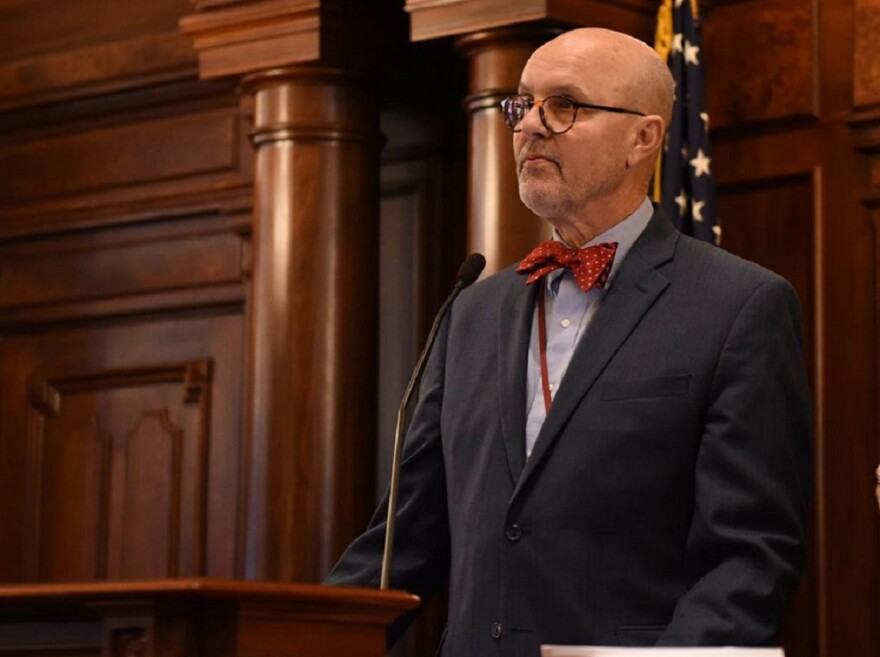
Democratic state Sen. Dave Koehler, representing parts of Peoria and Bloomington-Normal, said universities can only cut so much spending before hurting a student’s education.
“If anybody has really had a deep discussion with anybody at the university level, you’ll understand that they are already doing that. And they’re doing it because they have to,” Koehler said.
Koehler said Illinois needs to support higher education with more funding because spending cuts alone will not be enough to fix their budgets.
“I’ve supported increases for higher ed for a long time. Of course, the reality is… it’s going to be another tough budget year, but our universities are very deserving of this, so we need to support them at a higher rate," Koehler said.
Koehler said the state needs to continue funding ISU so it can create the next generation of teachers in Illinois.

State Senator Sally Turner, R-Beason, said it is important that Illinois makes universities affordable for residents to keep them in the Illinois economy.
Turner said evidence-based funding is one way for Illinois to make universities more affordable.
“I guess it’s a fair and equitable way that we can support our students and send them to the universities here in Illinois, and keep them here that they can afford and that we can assist in that endeavor,” Turner said.
Turner said her concern is that it would cost a lot of money to properly implement the new system, which Illinois does not have.
Media Feeds All
via Politics & Government https://ift.tt/jGa07Q4
February 10, 2026 at 01:32PM
 Illinois Delivered