
By Dan Gentile
Despite riding high on the momentum of a great ’25-’26 season so far, the Chicago Bears continue the new stadium discussion. With the purchase of Arlington Racetrack and rumors of a northwest Indiana stadium, it is clear they are more than serious about moving from Soldier Field. At the end of the day, it all comes down to the money. Unless we offer the team a serious incentive to stay, the city of Chicago might lose a huge asset and economic engine.
These are clear motivators for the franchise to move out of Soldier Field. A new stadium would be a shiny new attraction for fans, and might have a dome to keep seat demand high even in bitterly cold Chicagoland weather. Soldier Field has the lowest capacity in the NFL, so a larger stadium would mean more seats and increased revenue. The Bears would have direct control of the surrounding entertainment district and amenities for fans. If you’ve ever been to a game, you know the logistics chaos on game day. So what can our city do to keep Soldier Field competitive and convince the team to stay?
Bears President Kevin Warren’s open letter to fans last month emphasized frustration with Springfield, and called for public investment in infrastructure ("roads, utilities, and site improvements") as well as propoerty tax concessions. "Over the past several years, we have worked in good faith with Illinois leaders and made clear our commitment and readiness to invest more than $2 billion" in the Arlington Heights location.
What if, instead of letting the Bears flee to the ‘burbs, targeted infrastructure investments at Soldier Field could convince them to stay? Outside of direct stadium and amenity improvements, the obvious thing Chicagoland leaders have control over and can improve is the transportation network. Not only can more efficient travel to and from the stadium upgrade the game day experience for all fans, but it would improve the region’s overall transportation.
As it happens, this would not be an overly complicated endeavor. Although the CTA’s Roosevelt Station is about a mile from the stadium, Metra’s 18th Street Station is just outside the arena, It’s a barebones facility that serves Metra Electric trains covering a swath of the Southeast Side and south suburbs. But what if you could access 18th Street Station and the stadium from across the whole region?
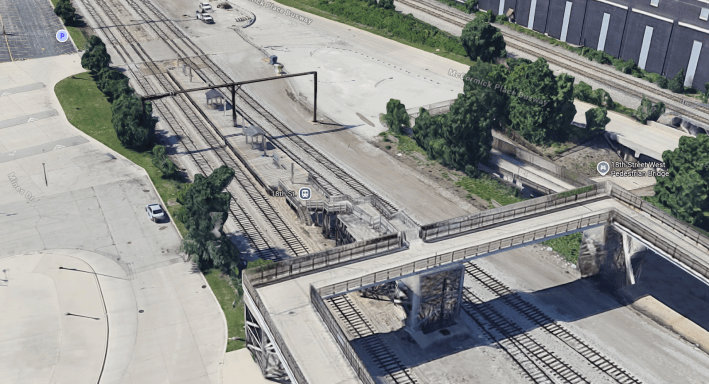
With the existing station and freight right of way, a connection could be made between the Metra Electric / South Shore Line corridor and Union Station along the St. Charles Air Line Bridge. My Chicago 2100 proposal for a rapid transit grid was heavily inspired by the Yard Social / StarLine: Chicago #BuildTheTunnel plan. Their regional concept takes it a step further, with a Clinton-Roosevelt Connector Line.
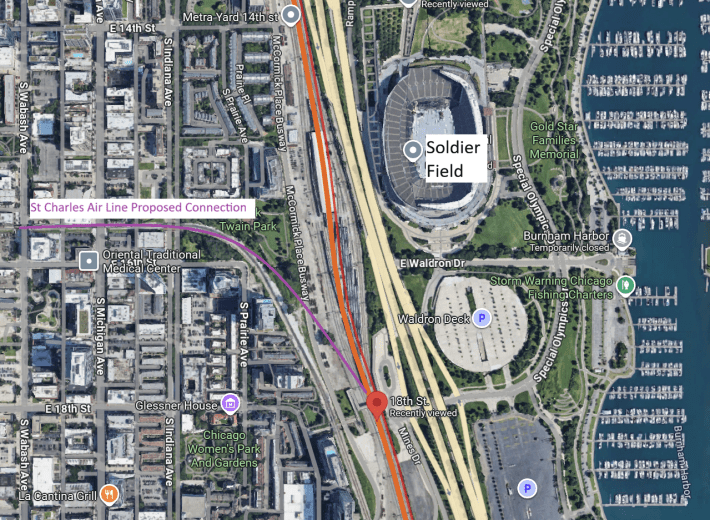
With separation from other track operations downtown, the CRCL Plan elegantly introduces crosstown service to fill rapid transportation gaps, while keeping the traditional commuter oriented rail routes to meet the needs of all regional users. Using the underdeveloped 18th Street Station and a large enabling project, the system could connect residents across the region to 18th street for Soldier Field events.
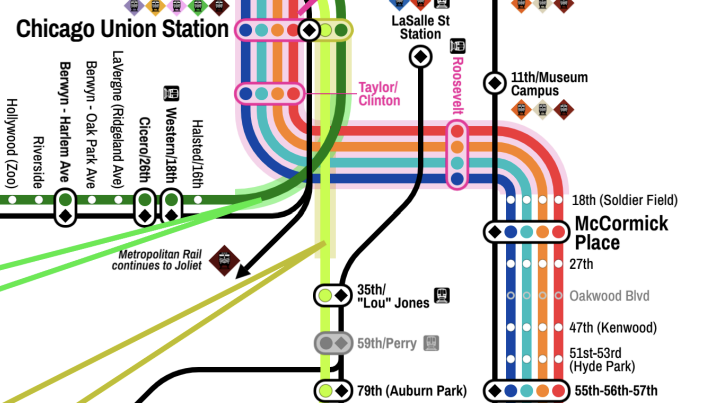
Imagine taking a Metra express train from across the region directly to Soldier Field for a game. Further, the City could invest in bus priority near the stadium for games, helping more local residents access the campus. These initiatives would alleviate the game day nightmare of sitting for hours in traffic, and show real commitment from the City that they want the Bears to stay in their lakefront home.
The Star:Line’s grand proposal and execution would be just that, ideally before the expiration of the Bears lease at Soldier Field in 2033. Alongside a needed large infrastructure commitment by the City, the new Northern Illinois Transit Authority legislation could fund feasibility investigation of a tunnel or St. Charles Air Line connection. These upgrades would improve more than just game day. They’d transport people across the region to other nearby destinations like Wintrust Arena, the rest of the Museum Campus, and McCormick Place.
Chicago already has a shining example of transit-prioritized stadium development at Wrigley Field. That’s a wild success that the owners of the United Center are hoping to replicate with the 1901 Project. Clearly there are many differences between a stadium that’s already centrally located in a neighborhood – with plenty of room for private and franchise-led development – and one that’s situated on the lakefront. If the City made transit a prioritized option to Soldier Field and the Bears still wanted more, some of the existing parking area could be redeveloped into a commercial hub.
Not all hope is lost for the Bears staying at Soldier Field. Fixing transportation alone may not be enough to change the team’s relocation mindset. Strategic improvements to the stadium’s seating and amenities would have to be coordinated.
Chicago needs to step-up on offense and compete for the Bears to stay. It can do so by investing in better game day transportation options, while vastly improving the region’s transportation network. Thanks to this fantastic season at the team’s longtime home, many lifelong fans are eager to continue to Bear Down at Soldier Field for the long run.
Sign the Chicago 2100 Petition and commit to improved transit to keep the Bears in Chicago.
Read about #BuildTheTunnel and the Starline Crosstowners here.
Dan Gentile, a lifelong Chicagoland resident and Bears fan, has an educational and professional background in civil engineering.

On November 12, SBC launched our 2026 fund drive to raise $50K through ad sales and donations. That will complete next year’s budget, at a time when it’s tough to find grant money. Big thanks to all the readers who have chipped in so far to help keep this site rolling all next year! Currently, we’re at $13,180 with $36,820 to go, ideally by the end of February.
If you value our livable streets reporting and advocacy, please consider making a tax-exempt gift here. If you can afford a contribution of $100 or more, think of it as a subscription. That will help keep the site paywall-free for people on tighter budgets, as well as decision-makers. Thanks for your support!
– John Greenfield, editor
Ino Saves New
via rk2’s favorite articles on Inoreader https://ift.tt/tpZCd9g
January 8, 2026 at 06:34AM
 Illinois Delivered