
The Clean Slate Illinois Coalition (CSIL), a diverse group of social justice organizations, is celebrating after the Illinois State Legislature passed the Clean Slate Act on Oct. 30, the final day of the fall veto session. The Clean Slate Act will streamline expungement and record sealing statewide, helping millions of Illinois residents hindered by past arrest and conviction records.
With approval from both chambers, the Clean Slate Act now awaits a signature from Gov. JB Pritzker. At the moment, it’s unclear if Pritzker supports the legislation. The TRiiBE reached out to Pritzker’s office for comment but hasn’t received a response yet.
For many impacted by the criminal justice system, the stigma of a conviction doesn’t end once their sentence is complete. A criminal record creates barriers to housing, jobs, and other opportunities.
“I am a formerly incarcerated person, but that should not mean I should be permanently unemployed,” Workers Center for Racial Justice Board President Jermont Montgomery wrote in a press statement. Workers Center for Racial Justice is among the dozens of community-based organizations that make up the Clean Slate Illinois Coalition (CSIL) and the Clean Slate Initiative.
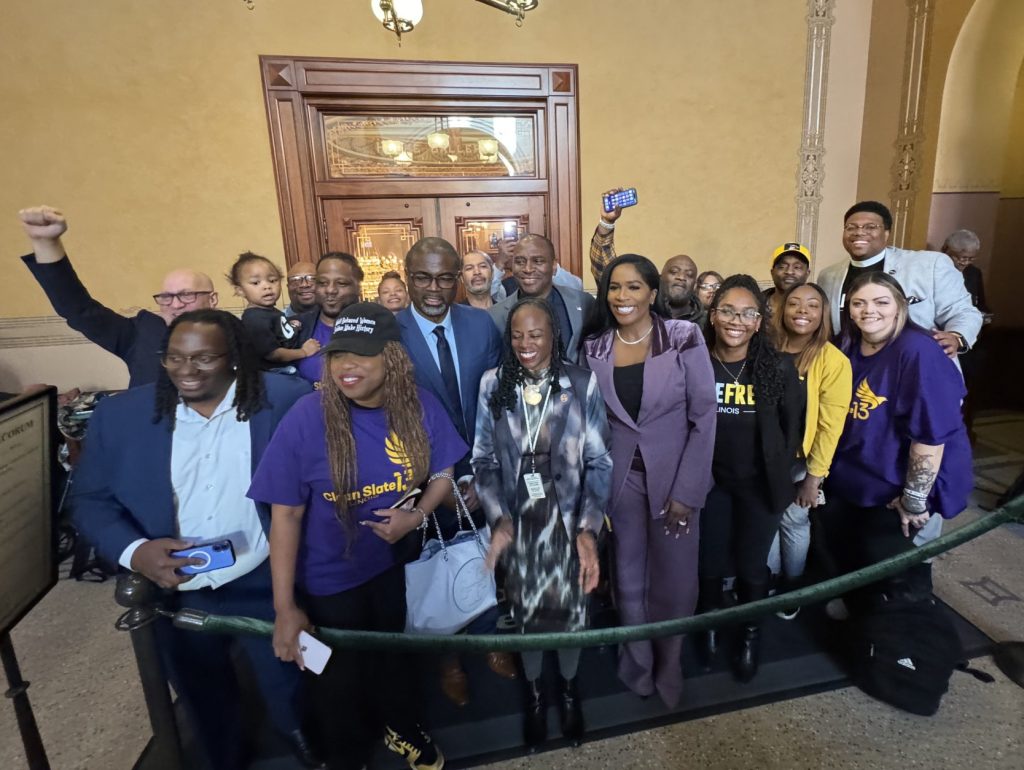
“The Clean Slate Act moves us closer to creating real opportunities for those of us who have faced discrimination long after serving our time and paying our debt to society,” Montgomery continued.
More than three million adults in Illinois have a past arrest or conviction record. In Illinois, there are more than 1,189 laws that indefinitely punish people with criminal records, most of which create barriers to employment, according to the 2020 report “Never Fully Free: The Scale and Impact of Permanent Punishments on People with Criminal Records in Illinois.”
Criminal justice advocates say the economic impact of the Clean Slate Act could restore up to $4.7 billion in lost income.
Illinois senators gave final approval to the Clean Slate Act, or House Bill 1836, on Oct. 29. A previous version of the bill, which creates an automated record-sealing process in place of the existing petition-based process, was passed by the Illinois House in May.
While expungement and record sealing are available for certain convictions, advocates say the process can be arduous and costly. Expungement erases arrests and court supervision, while sealing hides a record from the public view except for law enforcement agencies.
“The Clean Slate Act is a historic victory for justice and opportunity in Illinois. By removing permanent barriers, we affirm that redemption and second chances are possible for everyone. Today, 2.2 million people can finally move forward and help build a stronger, more hopeful future for our state,” Rev. Ciera Bates-Chamberlain, executive director of LiveFree Illinois, said in a written release. Live Free Illinois was one of the leading steering committee organizations.
While the Clean Slate Act establishes an automatic process for sealing certain records, it excludes serious criminal offenses ineligible for sealing or expungement under current state law.
With its passage, Illinois joins at least half a dozen states, led by both Democratic and Republican governors, that have passed clean slate legislation.
Automated record sealing by the Illinois State Police and Circuit Courts is slated to begin by Jan. 1, 2029.
The post Organizers await Pritzker’s signature on historic Clean Slate legislation appeared first on The TRiiBE.
via The TRiiBE https://thetriibe.com/
November 4, 2025 at 02:01PM
 Illinois Delivered