
If Europe can crack down hard on plastic waste from restaurants, we see no reason Chicago can’t, too.
And not to save the world, nice as that might be.
But to protect our own food and drinking water right here at home.
We strongly support a proposal by Ald. Scott Waguespack (32nd) to ban polystyrene to-go boxes and limit single-use plastics at Chicago restaurants. The foam boxes and plastic forks and knives are convenient, to be sure, but they are trashing our local environment, including the waters of Lake Michigan.
We suspect that most Chicagoans would be just as happy — or happier — with environmentally friendly alternatives, just so long as they can get their restaurant food home and keep their coffee hot.
In 2016, researchers found that each year 22 million pounds of plastic debris get into the Great Lakes, where ultraviolet rays break the plastic down into tiny fibers. Lake Michigan’s water is full of microfibers from all the waste, which finds its way into the fish that humans later eat.
Plastic microfibers also make their way into groundwater. And because the microfibers are hard to filter, they turn up in drinking water, beer and other beverages.
What you can do to keep plastics out of the water
- Use lower water temperature, fill the washing machine, use a slower spin cycle and wash your clothes in a bag such as Guppyfriend to trap microfibers released during the laundering process. After washing, the fibers can be disposed of.
- Buy fewer clothes with synthetic materials. Most fibers are released in the first couple of washings.
- Pack a reusable bag when shopping.
- Avoid single-use plastics when possible. For example, if you don’t need plastic straws at a restaurant, say so.
- Recycle plastics properly.
Last year, an analysis by Waste Management of the trash that volunteers brought in from seven sites along the Chicago River found that half of it was food-and beverage related. Meanwhile, studies by Loyola University Chicago aquatic scientist Timothy Hoellein have found that 93% of Chicago River fish have plastic in their tissues.
As Jennifer Walling, executive director of the Illinois Environmental Council, told us Thursday, “We are Chicagoans. We don’t want to have garbage on our front sidewalks as they do in New York. If we want to be a clean city, this is an ordinance that we have to pass.”
As currently written, the proposed ordinance would go into effect on Jan. 1, 2021, but Waguespack says it may take longer than that to gear up an educational campaign with such partners as schools, the Shedd Aquarium, the Field Museum and other organizations. Backers of the ordinance also are continuing discussions with restaurant and small businesses groups that are concerned about the impact on their bottom line.
The proposal, championed by Mayor Lori Lightfoot, would require restaurants to use reusable dishes only for dine-in orders and recyclable or compostable containers for to-go food. Restaurants would have to cut back on plastic eating utensils by providing them only by request or at a self-service station. Plastic drinking straws would be made available when specifically requested.
Customers could also bring their own reusable cups into a restaurants.
-

On Chicago River Day, volunteers conduct cleanup of litter along the river in Ping Tom Park in Chinatown on May 11, 2019. Friends of the Chicago River photo -

In this June 18, 2019, photo, a plastic recycling company worker sorts out plastic bottles collected for processing at Tokyo Petbottle Recycle Co., Ltd, in Tokyo. Japan has a plastic problem. Single bananas here are sometimes wrapped in plastic. So are individual pieces of vegetables, fruit, pastries, pens and cosmetics. Plastic-wrapped plastic spoons come with every ice cream cup. (AP Photo/Koji Sasahara) -

In this Saturday, Jan. 30, 2010 picture, people carry paper and plastic shopping bags in Portland. AP Photo/The Oregonian, Ross William Hamilton -

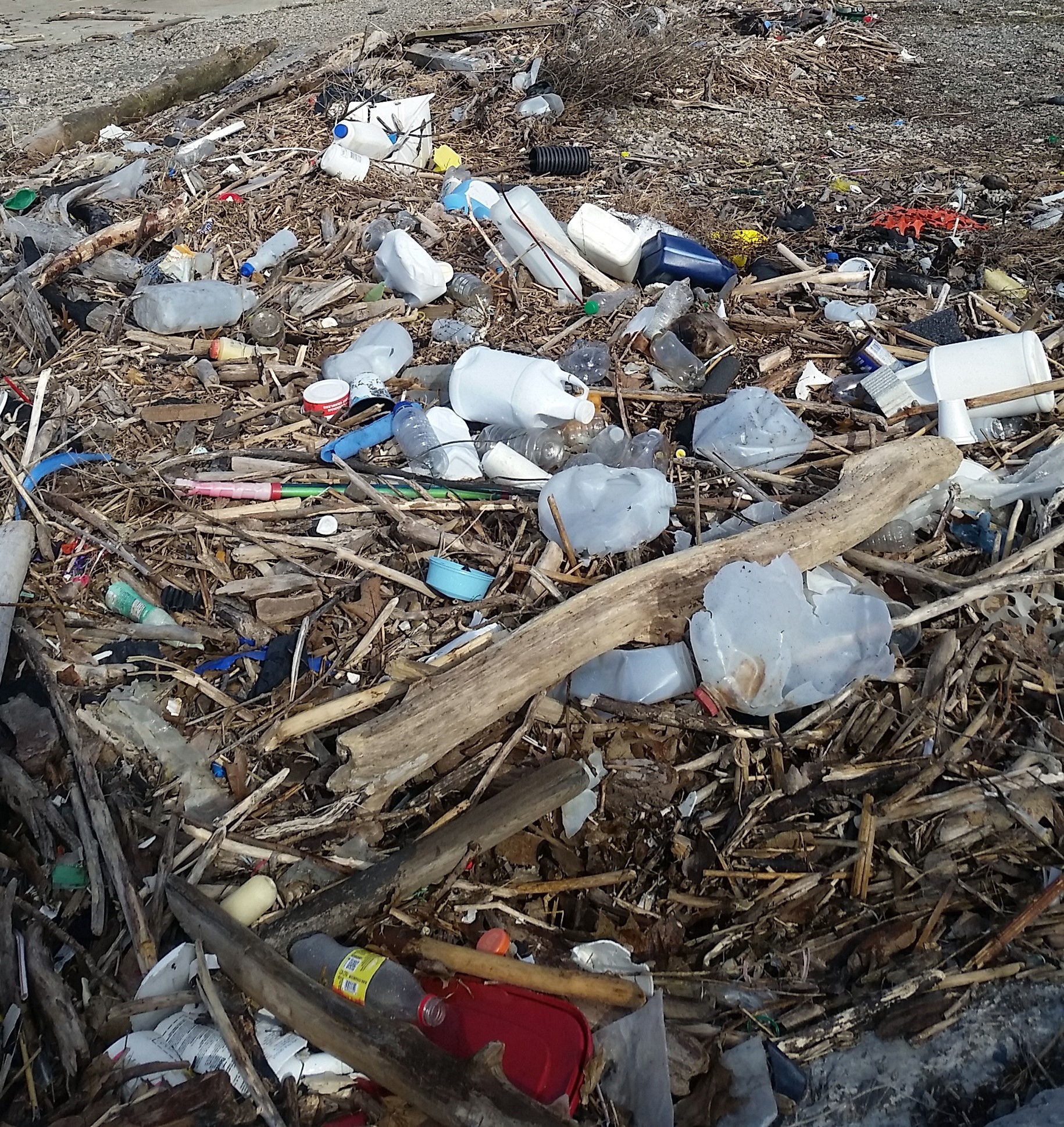
Discarded plastic found on a Great Lakes beach. Alliance for the Great Lakes photo -

Plastic and other trash litters the shore near the Port of Cleveland at the mouth of the Cuyahoga River on Lake Erie. Alliance for the Great Lakes photo



Last year, the European parliament voted to ban single-use plastic cutlery, straws and stirrers by 2021. Canada’s Prime Minister Justin Trudeau has said Canada will impose a similar ban next year. Such bans are intended to encourage companies to keep improving environmentally friendly alternatives.
There’s a common-sense logic to all this. It is absurd that things we use for a matter of minutes, such as a disposable fork, are made out of plastics that won’t decompose for hundreds of years. If Shakespeare had used a plastic fork, you might be able to dig it up from a landfill today.
According to Block Club Chicago, more than 300 cities and 55 countries around the world have banned single-use plastics. Just on Wednesday, the Washington State Senate voted to bar retailers from handing out single-use plastic bags.
The easiest way to get plastic pollution out of our environment is to stop it at its source. The City Council should jump at a chance to do that.
Send letters to letters@suntimes.com.
01-All No Sub,17-Energy,02-Pol,010-Inoreader Saves,16-Econ,19-Legal,22-Talk,26-Delivered
via Chicago Sun-Times
January 16, 2020 at 07:27PM
 Illinois Delivered