
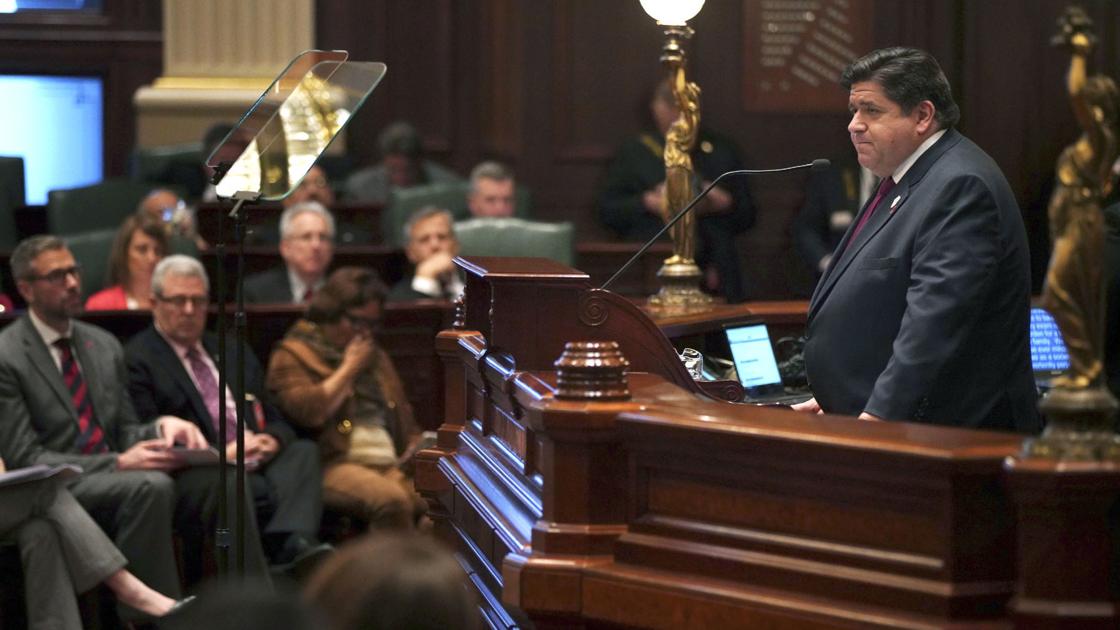
SPRINGFIELD — Gov. J.B. Pritzker on Thursday unveiled proposed rates for his graduated income tax plan, the cornerstone to his plan for stabilizing Illinois’ shaky finances.
Under the plan released Thursday, 97 percent of taxpayers — those whose net income is less than $250,000 — would see their state income tax bills decrease, according to a presentation from the Pritzker administration.
The state currently taxes personal income at a rate of 4.95 percent regardless of the taxpayer’s income. The Illinois Constitution mandates a flat income tax structure, but Pritzker campaigned on passing an amendment to shift to a federal-style graduated structure, under which higher earners pay a higher rate.
Throughout his campaign and in his budget address last month, Pritzker declined to disclose his proposed tax rates, saying they would be negotiated with lawmakers.
If voters approve an amendment, Pritzker proposes lowering the income tax rate to 4.75 percent for the first $10,000 of income for single and joint filers. Income between $10,000 and $100,000 would be taxed at 4.9 percent, and the rate would remain 4.95 percent for income between $100,000 and $250,000.
From there, the top rates would be 7.75 percent for income up to $500,000, 7.85 percent for income between $500,000 and $1 million, and 7.95 percent for all income if someone earns more than $1 million.
The governor also proposes increasing the current property tax credit by 1 percentage point, from 5 percent to 6 percent. He also would create a per-child tax credit of up to $100 for individuals earning less than $80,000 and joint filers earning less than $100,000.
Pritzker estimates his plan would generate $3.4 billion in additional revenue for the state annually.
Before any of that can happen, three-fifths majorities in each chamber of the legislature must approve placing a constitutional amendment on the ballot for voter approval. That can’t happen until November 2020 at the earliest.
It’s already promising to be one of the biggest ballot measure fights in Illinois history, with “dark money” groups that aren’t required to disclose their donors lining up on either side. One — Think Big Illinois — is tied to the governor, and the other — Ideas Illinois — is tied to business interests.
01-All No Sub,02-Pol,16-Econ,19-Legal,26-Delivered,HL,HL New,RKPRS HL
Region: Decatur,City: Decatur,Politics,Region: Central
via herald-review.com – RSS Results in news/state-and-regional/govt-and-politics of type article https://ift.tt/2JqbLLr
March 7, 2019 at 03:44PM
 Illinois Delivered